

A Self-Hosted Cdn With AIThat Names Your Images.
A Cloudflare R2 media CDN with AI-powered auto-renaming, upload presets and per-asset analytics. A vision model reads the image and generates a descriptive, SEO-friendly filename before it ever lands in storage.

The Actual Interface.
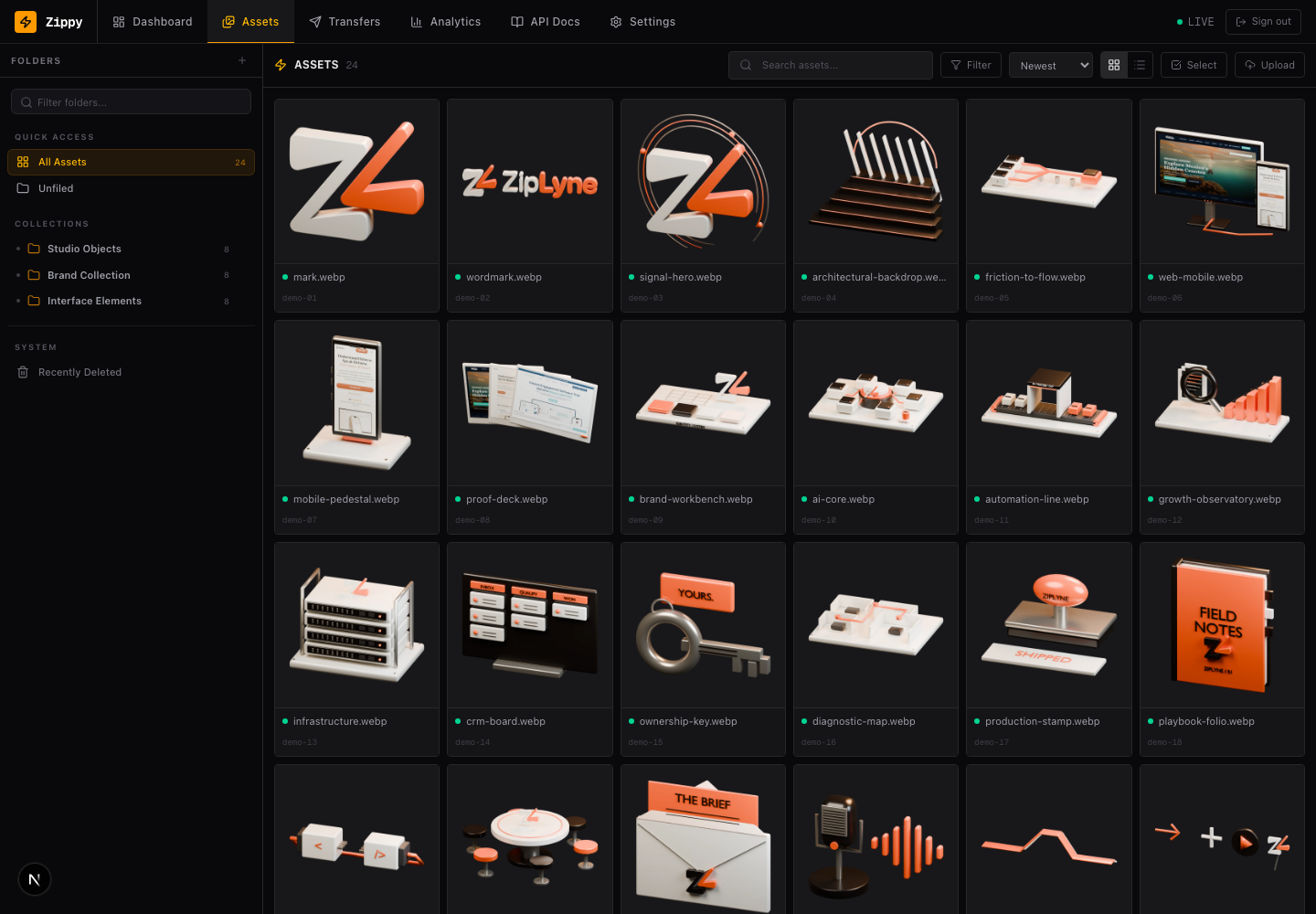
Every Agency Has A Library Nobody Can Search.
It fills up with IMG_4821.jpg files. Nobody renames them at upload, so nobody finds them later, and the filenames carry no SEO value at all.
Zippy CDN solves the naming problem at upload time rather than asking anyone to clean up afterwards.
R2 Storage, AI Naming, Built-In Analytics.
AI renaming. When an image is uploaded, a vision model analyses the content and generates a descriptive, SEO-friendly filename, for example sunset-aerial-photo-santa-teresa-costa-rica.jpg. The IMG_4821.jpg problem is solved permanently, at upload time.
Upload presets. Define named presets such as blog-hero, product-thumbnail and og-image, with target dimensions, format, WebP or AVIF, quality settings and CDN path prefix. One click applies all transformations at upload time via Cloudflare Workers.
Per-asset analytics. Every asset in the CDN has its own analytics row: view count, bandwidth consumed and referring domains, surfaced in a Next.js dashboard, so you can see which images drive traffic and which sit idle.
Bulk operations. Bulk rename with AI across a folder, batch format conversion to WebP or AVIF, and bulk delete with a confirmation modal. Operations run as background jobs and the dashboard shows progress without blocking the UI.
Three Steps From Upload To Cdn URL.
Step 01, image upload. The file lands in a staging bucket on Cloudflare R2. The upload triggers a Cloudflare Worker that passes the image binary to the vision model for content analysis.
Step 02, vision analysis. The model describes the image content and generates a slug-formatted, SEO-friendly filename. The model is prompted to be specific about subject, location and context rather than returning a generic label.
Step 03, transform and store. The Worker applies the upload preset transformations, resize, format conversion and quality, then moves the processed file to the production bucket under the AI-generated filename. The CDN URL is returned to the dashboard.
- Vision model
- Cloudflare R2
- Cloudflare Workers
- Next.js
- Supabase
Let’s Build What’s Next.
Bring the business problem. We’ll talk through what would make a difference and where to start.